By Mass L. Usuf – 
“Do not say those killed in the way of Allah as “Dead”.They are alive but you perceive not” ~ (Quran: 2/154)
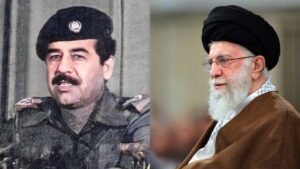
There is not a single person who has ever walked in this earth has been spoken well of by everyone. This includes even the great reformers like Gautama Buddha, Prophets Jesus and Mohammed. Each of them had those who envied them, spoke ill of them or disliked them. The world witnessed both mourning and joyous celebrations throughout Iraq on the execution of the Iraqi President Saddam Hussein by hanging on 30 December 2006. He was convicted of crimes against humanity by an Iraqi Special Tribunal instituted by the Israeli driven agenda of regime change advanced by America. The Tribunal was heavily criticised by Human rights organisations like Amnesty International and Human Rights Watch for being far below international standards of fairness and justice. There was limited access for defence, proceedings were rushed and political pressure on the judges clearly lacking impartiality and independence. Whether Saddam Hussein’s execution represented the dispensation of Western-style “Hollywood justice” or amounted to outright murder remains an open verdict.
It is worth noting a glaring double standard. It is the same America which today stands shoulder to shoulder with Israel again in the ongoing conflict with Iran but has failed to hold Prime Minister Netanyahu accountable for the repeated massacres, gross violations of international humanitarian law and war crimes committed in the occupied Palestinian territories. And, it is the same America that, on the one hand condemns Iran for ‘repressing protestors’, while on the other, is shielding Netanyahu from his unspeakable genocidal crimes.
Alive not dead
On 28 February 2026, a coordinated missile strike by United States and Israel was carried out against targets in Iran. In this series of large-scale attacks, the Supreme Leader of the Islamic Republic of Iran Ali Hosseini Khamenei was killed while in his office. He was the second Supreme Leader of Iran from 1989. He was previously elected as the President of Iran and served two terms (1981–1985 and 1985–1989). On both occasions he was elected overwhelmingly securing 95% of votes. After Ayatollah Ruhollah Khomeini’s death in June 1989, Khamenei was appointed Supreme Leader by the Assembly of Experts. It must be clearly stated that in the Islamic Republic of Iran, the Supreme Leader is not a dictator, contrary to the misleading, blatantly false claims made by President Donald Trump and Prime Minister Netanyahu.
Just as the great reformers had critics Ali Khamenei, the Supreme Leader of the Islamic Republic of Iran was no exception to this human behaviour. Once news of the death of Ali Khamenei was confirmed, there were both celebrations and mourning. As is well known, Western media bias was evident in its coverage: it widely portrayed insignificant instances of few celebrating the death of Ali Khamenei, while giving little or no coverage to the far greater numbers who genuinely mourned his passing. Protests by Pro-Iranian and anti-war groups erupted in many countries – United States, Europe, Middle-East, Pakistan, India – condemning this aggression and supporting the government of Iran. It is reported that U.S embassies had been attacked by protesters in some places.
For a true believer in Islam death in way of Allah is of no concern simply because martyrdom is the highest goal that one can achieve on the face of oppression, injustice and tyranny. Allah clearly states in the Quran do not say that such a person is dead. He is not dead. He is alive but we humans with limited perception cannot perceive this fact. This is a state of higher realm transcending human comprehension. It eludes the grasp of mortal thought, unimaginable and indescribable, dwelling solely within the metaphysical realm.
Paranirvana
It is like the state of Paranirvana (Paranibbana, in Pali) that the Buddha has achieved. It is a state that leads to nothingness (extinguished) which cannot be perceived in the ordinary sensory ways or seen by the material being by the five aggregates (skandhas) – of form, feeling, perception, mental formation and consciousness. However, any human being who desires to achieve this status may strive towards that path and experience the phenomenon of Nirvana and Paranirvana. This state which buddha described as, “the unborn, the unconditioned, the deathless”.
Though the above Buddhistic exegesis does not exactly reflect the Islamic teachings of life after death, it is mentioned here in order to give some semblance of what is conditioned as life after death in the path of Allah.
Death in Context
Death is an inevitable occurrence to all human beings. However, all deaths are not the same though there are common types of death like due to illness. Even in this category one may see the cause of death being different from one to another where the underlying factor may be for example cancer, kidney or respiratory failure. Other types include battlefield deaths, dying in the course of protecting others and death under natural circumstances.
In Islam, death in the path of Allah has a different connotation. Death can be classified as a normal death and a martyrdom. To die as a martyr in Islam is a distinct honour because such a death arises from dying in defence of the faith or establishing justice or dying in resistance to tyranny and oppression.
For a pious personality of the calibre of Ali Khamenei he would have been yearning that he dies as a martyr than dying in the hospital bed out of illness or old age. His death is clearly distinct as a death under circumstances of standing against oppression and unjust aggression. Though it is a great loss to the Iranian nation as a whole, on an individual basis he has achieved his final and ultimate goal of being a Shaheed, a martyr. It’s a rhetorical expression, one could say that the soul of Ali Khamenei itself may be celebrating his death under these circumstances. It would be the same for the thousands who were martyred in Gaza and the occupied territories facing death in the face of oppression and persecution.
72 Virgins in heaven
It would be timely to reflect on the often-misinterpreted claim of martyrs having 72 virgins for themselves in heaven. There is no mention of “72 virgins” in the Quran. The Quran describes heavens in terms of eternal peace, gardens, rivers and companionship, tranquillity and spiritual bliss. Just like Buddha’s description of Paranibbana as “the unborn, the unconditioned, the deathless”. There is no birth or death in heaven and nothing is conditional it is a pure state of ultimate bliss that words cannot express.
Sword and Spine
Given the stature and dignity of this personality, it behoves the government of Sri Lanka to extend its condolences on the passing of the Supreme Leader of the Islamic Republic of Iran, and further to condemn the killing of a Head of State. It has been observed that Ali Khamenei did not die with a sword in his hand, but with a strong spine—symbolizing bravery and courage in standing firm against a corrupt, hegemonistic, imperialist super power.
The question remains: will the government take inspiration from such a symbol and act accordingly?
*Mass L. Usuf, LL. B (Hons) U.K., Attorney at Law (Ex-Corporate and Legal Advisor