By Jehan Perera 
There has been a rare consensus of opinion in the country that the government’s humanitarian response to the sinking of Iran’s naval ship IRINS Dena was the correct one. The support has spanned the party political spectrum and different sections of society. Social media commentary, statements by political parties and discussion in mainstream media have all largely taken the position that Sri Lanka acted in accordance with humanitarian principles and international law. In a period when public debate in Sri Lanka is often sharply divided, the sense of agreement on this issue is noteworthy and reflects positively on the ethos and culture of a society that cares for those in distress. A similar phenomenon was witnessed in the rallying of people of all ethnicities and backgrounds to help those affected by the Ditwah Cyclone in December last year.
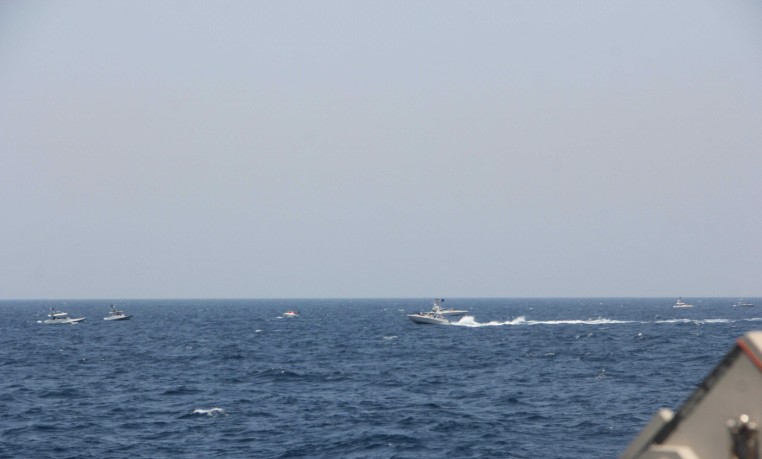
The sinking of the Dena occurred just outside Sri Lanka’s territorial waters. According to reports, the ship sought safe harbour and requested docking in Sri Lanka’s ports, but before the Sri Lankan government could respond the Dena was fatally hit by a torpedo. Whatever decision the Sri Lankan government made at this time was bound to be fraught with consequence. The war that is currently being fought in the Middle East is a no-holds-barred one in which more than 15 countries have come under attack. The sinking of the Dena so close to Sri Lanka’s maritime boundary has meant that the war has come to the very shores of the country. In times of war emotions run high on all sides and perceptions of friend and enemy can easily become distorted.
In such situations countries that are not directly involved in the conflict may wish to remain outside it by avoiding engagement. However, the traditions of maritime conduct and the requirements of international law are clear that assistance must be given to those in danger at sea. Foreign Minister Vijitha Herath informed the international media that Sri Lanka’s response to the present crisis was rooted in humanitarian principles, international law and the United Nations Convention on the Law of the Sea. The Convention on the Law of the Sea (UNCLOS), which was adopted in 1982, provides the legal framework governing maritime conduct and obliges states to render assistance to persons in distress at sea. In terms of UNCLOS, countries are required to render help to anyone facing danger in maritime waters regardless of nationality or the circumstances that led to the emergency.
International Commitment
Sri Lanka’s response to the distress call of the Iranian ship reflects both humanitarianism and adherence to international law. Within a short period of receiving the distress message the Sri Lankan government sent its navy to the rescue. They rescued more than thirty Iranian sailors who had survived the attack and were struggling in the water. The rescue operation also brought to Sri Lanka the bodies of those who had perished when their ship sank. The scale of the humanitarian challenge is significant. Sri Lanka now has custody of more than eighty bodies of sailors who lost their lives in the sinking of the Dena. In addition, a second Iranian naval ship, IRINS Bushehr, with more than two hundred sailors has come under Sri Lanka’s protection. The government therefore finds itself responsible not only for survivors but also for the dignified treatment of the bodies of the dead Iranian sailors.
Sri Lanka’s decision to render aid based on humanitarian principles, not political allegiance, reinforces the importance of a rules-based international order for all countries. Reliance on international law is particularly important for small countries like Sri Lanka that lack the power to defend themselves against larger actors. For such countries a rules-based international order provides at least a measure of protection by ensuring that all states operate within a framework of agreed norms. Sri Lanka itself has played a notable role in promoting such norms. In 1971 the United Nations General Assembly adopted a resolution declaring the Indian Ocean a Zone of Peace. The initiative for this proposal came from Sri Lanka, which argued that the Indian Ocean should be protected from great power rivalry and militarisation.
Unfortunately, the current global climate suggests that the rules-based order is barely operative. Conflicts in different parts of the world have increasingly shown disregard for the norms and institutions that were created in the aftermath of the Second World War to regulate international behaviour. In such circumstances it becomes even more important for smaller countries to demonstrate their commitment to international law and to encourage the bigger countries to adopt more humane and universal thinking. The humanitarian response to the Iranian sailors therefore needs to be seen in this wider context.
Internal Commitment
Sri Lanka’s own experience of internal conflict has shaped public consciousness in important ways. Sri Lanka endured a violent internal war that lasted nearly three decades. During that period questions relating to the treatment of combatants, the protection of civilians, missing persons and accountability became central issues. As a result, Sri Lankans today are familiar with the provisions of international law that deal with war crimes, the treatment of wounded or disabled combatants and the fate of those who go missing in conflict. By acting swiftly to rescue those in distress and by affirming that its actions are guided by international law, Sri Lanka has enhanced its reputation as a small country that values peace, humane values, cooperation and the rule of law.