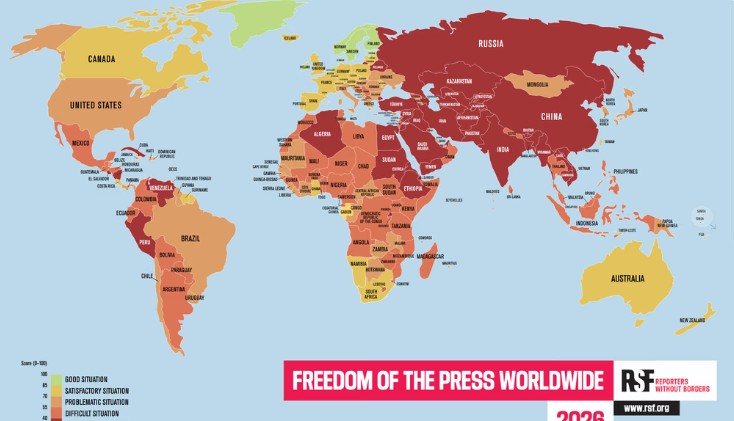
Sri Lanka has climbed five places in the 2026 World Press Freedom Index, ranking 134th out of 180 countries with a score of 40.77, according to Reporters Without Borders (RSF).
The latest report marks an improvement from 2025, when Sri Lanka was placed 139th. However, RSF noted that press freedom challenges in the country remain closely linked to the legacy of the civil war that ended in 2009 and unresolved cases of violence against journalists.
The report states that journalism in Sri Lanka continues to face risks, with a media landscape that lacks diversity, remains highly concentrated, and is influenced by major political groups.
Globally, the 2026 index highlights a worsening trend, with more than half of the world’s countries now classified under “difficult” or “very serious” conditions for press freedom—marking the lowest average score in the index’s 25-year history.
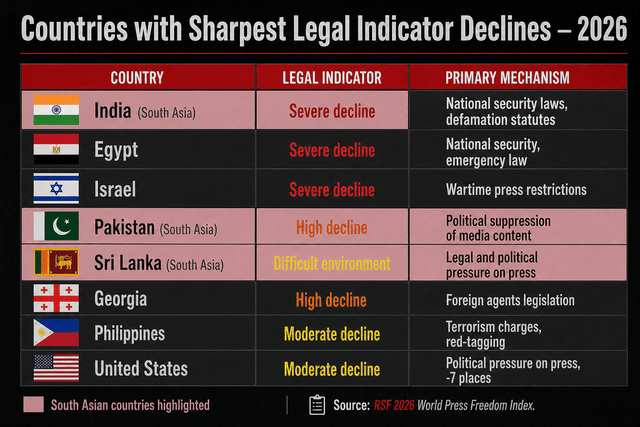
RSF also pointed to a significant decline in the legal environment for journalism, with restrictive laws and national security measures increasingly limiting access to information. The legal indicator worsened in over 60% of countries assessed.
Several countries, including India (157th), Egypt (169th), Israel (116th), and Georgia (135th), also recorded concerning declines.
In the Asia-Pacific region, 21 out of 32 countries are now classified as having “difficult” or “very serious” press freedom conditions, making it one of the most restrictive regions globally.
At the top of the index, Norway retained the number one position for the tenth consecutive year, while Eritrea ranked last for the third year in a row.