
While scrolling through my Meta account recently, I came across a post by a Senior Lecturer at the Open University, Dr Edirimuni Nadeesh Rangana de Silva. His message was not a grand manifesto; it was a beautifully simple, low-bar request. Addressing the high-profile ‘Clean Sri Lanka’ programme, he basically said: “Look, no need to do anything heroic. Just arrange to clear the rotting garbage in the Maharagama Urban Council (UC) area”. Almost in the same breath, two Instagram posts by Indian creators were going viral on my feed. An Indian content creator, Mehaik, and a travel vlogger, Shenaz Treasury, were busy filming themselves praising how remarkably clean Sri Lanka was, gushing over the Ella Railway Station while drawing some highly unflattering comparisons to the cleanliness back home in India. One of those videos crossed 80,000 views in a flash.
So, who got it right? The frustrated Lecturer or the starry-eyed influencers? As a Sri Lankan, I can safely say both. Our tourist destinations are meticulously groomed, like a living room kept pristine, exclusively for uninvited guests. In those pockets, cleanliness is understood as non-negotiable, and local communities have taken ownership without waiting for a circular from a Ministry. But, in the zones where actual Sri Lankans live, that ownership evaporates. Residents are left waiting for their Local Authorities to do the one job that they were literally invented to do. The gap between the spotless tracks of Ella and the overflowing bins of Maharagama is not a geographical problem; it is a priority problem.
In Sinhala, there is a brutal phrase that we use when life decides to kick you while you are already flat on your back: Higannage Paththareta Henahura Kadan Wetuna Wage like Saturn falling straight into a beggar’s bowl. It describes that exact moment when hardship arrives on your doorstep, unpacks its bags, and refuses to leave. One burden after another. Today, Sri Lankans are not asking for miracles. They are not even asking for political promises anymore. They are just asking to be allowed to live with a shred of basic dignity, and for a Government to provide the baseline services that make everyday life survivable. From Maharagama to Ambagamuwa, and Siyambalanduwa to Chawakachcheri, the exact same grievance echoes: something, somewhere, has gone very wrong.
The beggar’s bowl and the ballot box
Recently, I attended a virtual panel discussion with representatives from over 20 countries. During the session, I posed a question that carried a rather complicated backstory. According to the World Happiness Report, most countries in the Global South are predictably lagging behind, with Sri Lanka sitting uncomfortably at the 134th place. Meanwhile, the Nordic countries comfortably lounge at the top of the charts. Here is where the math gets fascinating. When you look at the voter turnout, the entire story flips upside down. The Nations leading the world in happiness often report a remarkably low voter turnout. Yet, countries in the Global South, drowning in economic crises and rock-bottom happiness metrics, routinely show up to vote in massive, exhausting numbers.
Why? Is it because citizens in the Global South still walk to polling stations carrying a desperate little glimmer of hope? Hope that this specific election might finally fix one solitary problem before the next disaster strikes? Or, is it because citizens in developed countries already enjoy systems that actually work? They have clean roads, functioning garbage disposal, reliable trains, and medicine in their hospitals. For them, voting is important, sure, but it is not a desperate act of survival. To put it bluntly: one group votes to gain something; the other votes to protect what they already have.
Sri Lanka is the textbook case. We complain about taxes, which is fair enough. But, let us drop the elite pretense that only the wealthy are feeling the squeeze. In Sri Lanka, poverty is no escape from the Inland Revenue Department. Thanks to the magic of indirect taxes, Value Added Tax (VAT), fuel taxes, telecom levies, and import duties, the poorest citizen pays the State every single day. You buy soap? Tax. You buy dhal? Tax. Milk powder? Tax. Fuel? Tax. Even a basic phone reload quietly feeds the State treasury. I often joke that in Sri Lanka, even the man who skips lunch still pays tax. Hunger may be free; Government revenue is not.
In 2023, nearly half of the Government’s tax revenue came from these flat taxes on everyday goods and services. Ordinary citizens are carrying the heaviest piece of the boulder. They accepted the staggering VAT hikes, the eye-watering electricity bills, and the fuel prices that treat wallets like an open buffet. New taxes arrive on our doorsteps like uninvited wedding guests. Yet, look at the remarkably humble invoice that the public sends back to the State in return. They are not demanding luxury. They are not asking for Scandinavian welfare systems or free bicycles and snowy, Nordic happiness. Sometimes, all they ask is: “Could you please just move the garbage?”
That is where the comedy turns into a tragedy. When a University Lecturer has to publicly beg a national programme just to clear a suburban street, Governments should start sweating. People are not rebelling against the concept of taxation; they are rebelling against the total absence of service delivery. That is the ultimate democratic red flag. The most dangerous moment for a democracy is not when the streets are loud with protestors. It is when citizens quietly shrink their expectations down to zero.
55-years and still no front door
If you want to see how bad it has got, look at the latest Numbeo Property Investment Index. Colombo is now ranked the single most unaffordable major City in the entire world for homebuyers. The price-to-income ratio stands at a ridiculous 55. That means that an average family would need to save 100 per cent of their household income for 55 years straight just to buy a home, leaving absolutely nothing for food, school fees, or a Municipal waste bill. Mumbai (India) is cheaper. Singapore is cheaper. Even Hong Kong is more affordable.
According to the Central Bank’s own Land Valuation Indicator, residential land prices shot up by 14.4 per cent in just the first half of last year (2025). And, if owning a home feels like science fiction, simply staying alive is not much easier. The Colombo Consumer Price Index tells us that a single person now needs around Rs. 17,117 a month just to cover absolute baseline physical survival. Not to enjoy life, mind you. No parties, no buying a new book, no catching a stage play at the theatre. Just breathing. We are not being priced out of luxury; we are being priced out of existence.
All the levers, none of the will
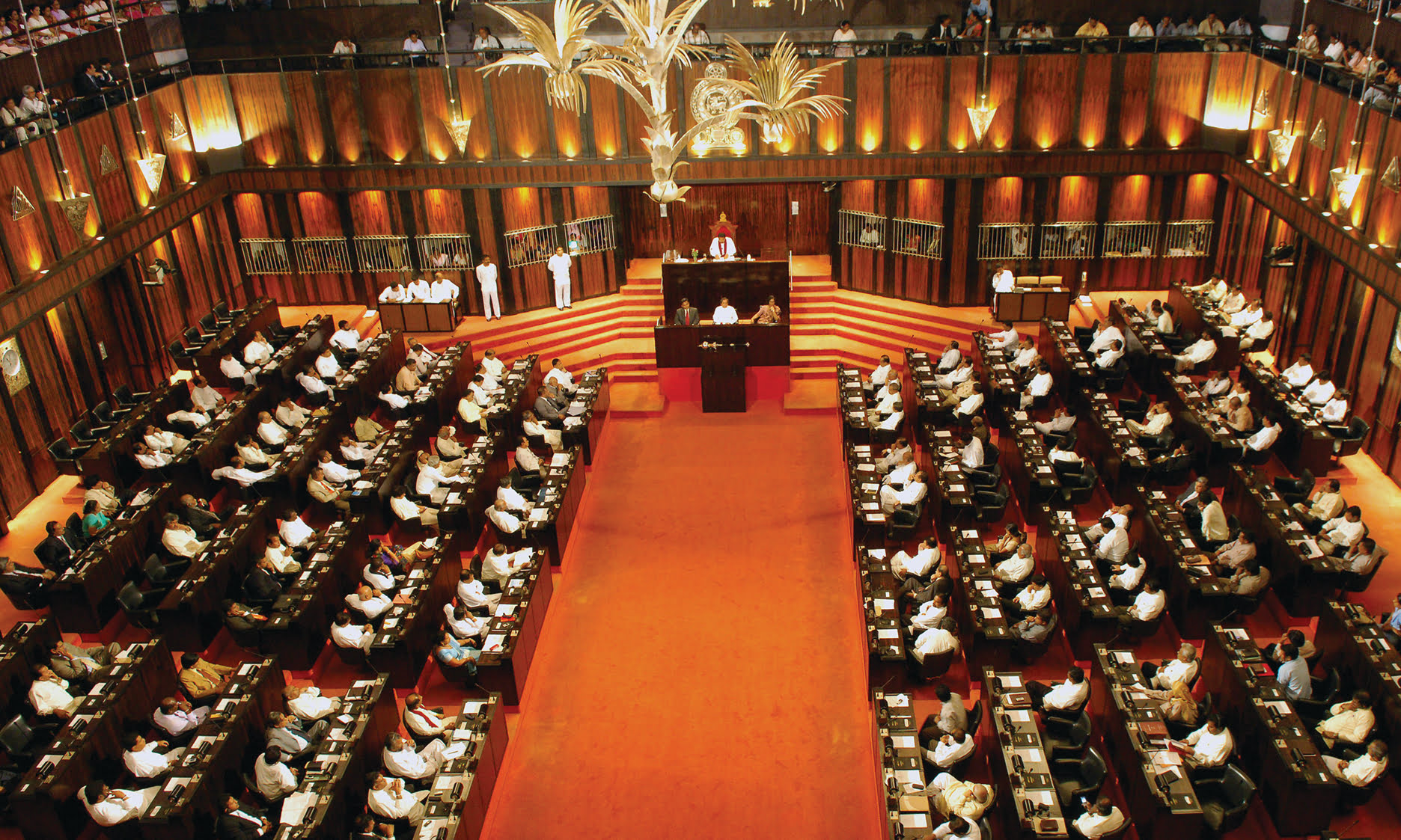
Right now, it is worth pausing to admire the sheer, staggering arithmetic of power that the National People’s Power (NPP) currently commands. They hold a supermajority in Parliament. They control the vast majority of Local Government Bodies. They have nine Provincial Governors answering directly to an Executive President. Constitutionally speaking, this is about as close to absolute, concentrated authority as a democracy legally permits. Passing a piece of legislation is no longer a political battle; it is just a routine afternoon of paperwork.
Spider-Man’s Uncle Ben famously warned that with great power comes great responsibility. The NPP clearly has the power. It is the execution where the plot is starting to thin.
Citizens are asking entirely reasonable questions. Food prices are still punishingly high. Granted, the Russia-Ukraine war fractured global supply chains, and the Middle Eastern conflicts have kept shipping freight rates in the stratosphere. Fuel prices are up – blame the global markets. Electricity bills are brutal – blame the wars, and perhaps that notorious, untouchable charcoal mafia that successive States have been suspiciously slow to dismantle. Those are real explanations. On paper, some of them are even valid. But, then you run into the one question that has absolutely no geopolitical excuse. “Why can’t you clear the garbage?”
No overseas war caused the Maharagama UC to break down. No global fuel spike is responsible for the rotting bags left sitting on a suburban street corner. This is not a crisis dictated by global headwinds. This is a question of domestic will, of basic management, and whether the people who now hold every single lever of State power can actually handle the boring, unglamorous business of daily governance. Truck maintenance, human resource allocation, route planning, and Municipal accountability do not require a two-thirds majority in Parliament to fix. They just require someone in charge to care enough to do the work.
Back in 1984, Rajiv Ratna Gandhi won a historic 404 seats in Parliament. India had never seen a majority like it, and likely never will again. Yet, within five short years, that massive mandate was completely gone, not because a rival defeated him, but because the administration simply drifted into irrelevance.
A supermajority is not a shield against failure. It is just a much longer, much louder distance to fall.
The views and opinions expressed in this column are those of the author, and do not necessarily reflect those of this publication