Contemporary nation-states face an unprecedented challenge: maintaining social cohesion when ethnic and religious identities assert themselves with renewed vigor. Sri Lanka, a nation of 22 million where Buddhism, Hinduism, Islam and Christianity coexist among Sinhalese, Tamil and Moor populations, exemplifies both the promise and peril of diversity. After three decades of civil war, the Easter Sunday attacks of 2019 and the economic collapse of 2022, the nation stands at a crossroads.
The prevailing models of nation building have proven inadequate. Western secular liberalism offers legal tolerance but fails to generate emotional solidarity. Asian collectivism provides resilience but often at the cost of minority rights. Islamic theocratic models furnish moral clarity but struggle with religious pluralism. None alone can deliver sustainable peace.
This article introduces a foundational concept: asymmetrical synergy. Each community possesses unique strengths – cultural, spiritual, economic, and psychosocial – that are not replicable by others. Sustainability does not require uniformity; it requires the deliberate integration of these asymmetrical strengths into a unified national project.
Four pillars must be explicitly integrated. Anti-corruption governance: the single greatest destroyer of social trust; national loyalty: spiritual and civic duty extending beyond ethnic boundaries; human brotherhood: moving from tolerance to active fraternity; and asymmetrical synergy: deriving strength from difference.
Theoretical foundations
The Islamic contribution: the Islamic family system rests upon a sacred covenant. Marriage constitutes half of faith producing internalized moral deterrence: divine accountability reduces crime organically; demographic sustainability: fertility rates of 2.6-3.1 children per woman ensure generational replacement; theological pluralism: “O mankind! We created you from a single (pair) of a male and a female, and made you into nations and tribes, that ye may know each other (not that ye may despise (each other)” (Quran 49:13); and anti-corruption as spiritual failing: corruption is a betrayal of divine trust.
The Asian contribution: Confucian and Buddhist family systems prioritize filial piety and collective duty. Relational ethics: morality defined by obligations to family and community; environmental minimalism: low per capita consumption and reverence for nature; communal anti-corruption: shame and loss of face as powerful deterrents; and loyalty as identity: national loyalty as extension of filial devotion.
The Western contribution: the Western gift is legal architecture. Institutional accountability: independent anti-corruption mechanisms; civic nationalism: loyalty to constitutional principles; environmental innovation: green technology and adaptation; and critical education: Fostering autonomous, thoughtful citizens.
Synthesis: A sustainable blueprint must integrate Islamic moral absolutism and brotherhood (internalized ethics and pluralism); Asian communal resilience and duty (multi-generational support and minimalism); Western legal frameworks (accountability, rights and critical thinking) and asymmetrical synergy (mutual recognition of indispensable strengths).
The Sri Lankan context
The indigenous social fabric: prior to European colonization, Sri Lankan society operated through complex systems of indigenous governance that balanced ethnic and religious diversity. The Kandyan kingdom, the Jaffna kingdom and the maritime regions maintained distinct identities while engaging in trade, cultural exchange and diplomatic relations. Traditional systems of justice, land tenure and community mediation rooted in Buddhist, Hindu and Islamic jurisprudence provided mechanisms for conflict resolution that preserved social harmony for centuries.
Family structures were multi-generational and communal: the velvettu amaipu system among Tamils, the pawula among Sinhalese and the extended kinship networks among Muslims ensured that no individual faced hardship alone. Religious institutions – temples, kovils, mosques, and churches – served not only as places of worship but as centers of education, healthcare and social welfare. This indigenous social architecture, while imperfect, provided remarkable resilience.
The colonial dismantling: Western colonization, beginning with the Portuguese in 1505, followed by the Dutch and finally the British in 1815, systematically dismantled this indigenous social fabric. Several critical mechanisms of dismantling are noteworthy.
Legal fragmentation: the British introduced a unified legal system that replaced traditional dispute resolution mechanisms. The imposition of Roman-Dutch law and later British common law displaced customary laws that had governed marriage, inheritance and land tenure for centuries. This created legal pluralism that often disadvantaged minority communities and eroded indigenous authority structures.
Land alienation: the Crown Lands Ordinance of 1840 declared that all waste lands belonged to the British Crown, effectively dispossessing peasant communities of their traditional lands. This was particularly devastating in the north and east where the British plantations displaced indigenous populations creating land grievances that persist to this day.
Educational displacement: the British introduced English medium education, creating a Western educated elite that became disconnected from indigenous knowledge systems. Traditional monastic education among Buddhists and madrasa education among Muslims were marginalized, creating a cultural schism between the elite and the masses. This educational displacement also created ethnic competition for English medium positions in the colonial administration, sowing seeds of inter-communal rivalry.
Religious marginalization: while the British nominally protected Buddhism under the Kandyan Convention of 1815, their administrative and educational policies favored Christianity. Missionary schools received state patronage while Buddhist and Hindu institutions were neglected. This created a perception among the majority Sinhalese-Buddhist community that their religion and culture were under threat, a perception that continues to fuel nationalist sentiment.
Economic exploitation: the British transformed Sri Lanka into a plantation economy, prioritizing export crops over subsistence agriculture. This disrupted traditional economic patterns, created dependency on global markets and concentrated wealth in the hands of a small planter class, predominantly British and later assimilated Burgher and elite Sinhalese and Tamil families.
Psychosocial trauma: perhaps most significantly, colonization created a psychology of inferiority and mimicry. Indigenous knowledge, languages and spiritual practices were devalued; Western civilization was presented as superior. This created what Frantz Fanon termed a colonized psyche – a deep-seated insecurity that manifests as either aggressive nationalism (overcompensation) or continued deference to foreign models. Both responses undermine authentic nation building.
Contemporary pathologies
The colonial legacy manifests in four interrelated pathologies.
- Constitutional ambivalence: Buddhism is granted foremost place yet the constitution also guarantees religious freedom. This ambiguity fuels majoritarian nationalism and justifies a two tiered citizenry.
- Trans-generational trauma: the 26-year civil war, itself a product of colonial-era ethnic categorization and resource competition, left psychological wounds that manifest as retreat into ethno-religious enclaves.
- Geopolitical vulnerability: Sri Lanka’s strategic location makes it a battleground for India-China rivalries with foreign powers exploiting ethnic divisions for strategic advantage – a pattern dating back to colonial times manipulation of local alliances.
- Systemic corruption: colonial extraction created a rent-seeking culture among local elites who collaborated with colonial powers. This culture persists, with Transparency International ranking Sri Lanka among the most corrupt in South Asia. Corruption destroys the social contract and fuels ethnic resentment.
Critical imperatives for nation building
Family as the unit of sustainability – the family is the primary site of moral formation and the foundation of social resilience. Indigenous Sri Lankan family systems – multi-generational, communal and spiritually grounded – provided buffers against hardship for centuries. Colonial economic policies and modern urbanization have weakened these structures, contributing to social fragmentation.
National family welfare funds: state matched savings for childbirth, education and elder care reduce financial stress and prevent family breakdown. Drawing on Islamic Zakat principles but state-administered, this fund ensures that economic pressures do not destroy family cohesion. Psychosocial outcome: children grow up in stable households, reducing juvenile delinquency by an estimated 40%; elders are not abandoned.
Multi-Generational housing incentives: tax rebates for homes accommodating grandparents, parents and children following the Asian model while ensuring private quarters for each nuclear unit, preserving Western dignity. This addresses the colonial legacy of nuclear family idealization that weakened extended kinship networks. Psychosocial outcome: elders receive care at home, children absorb ancestral wisdom and isolation – a modern Western epidemic – is eliminated.
Religious-based marriage counseling: mandatory pre-marital and crisis counseling by certified clergy from all four faiths. Couples choose their counselor, ensuring respect for religious law while accessing psychological support. This revives indigenous practices of community-supported marriage while incorporating modern psychological insights. Psychosocial outcome: reduced divorce rates and stronger marital bonds.
National family ethics curriculum: A parallel curriculum for parents teaching emotional intelligence, conflict resolution and the spiritual dimensions of parenting drawing from all four traditions. This addresses the colonial disruption of indigenous parenting knowledge. Psychosocial outcome: parents become conscious moral educators, breaking cycles of intergenerational trauma.
Moral and ethical rearmament – colonial education devalued indigenous moral frameworks, creating a moral vacuum that consumerism and political opportunism have filled. Rearmament is essential.
National ethics curriculum: teaching universal virtues of honesty, compassion, justice and forgiveness using stories from all four religious traditions. Not indoctrination but moral literacy. This repairs the colonial fragmentation of moral education. Psychosocial outcome: children internalize ethics as sacred duty, reducing crime organically and building shared moral vocabulary.
Interfaith moral councils: at every village, a council of clergy – Buddhist monk, Hindu priest, Muslim Imam and Christian pastor – meets monthly to resolve local disputes and issue joint moral guidance. This revives indigenous practices of community-based conflict resolution. Psychosocial outcome: models harmony at the grassroots, prevents religious competition and creates trusted local institutions.
National day of forgiveness: an annual public holiday where families visit those they have wronged and communities publicly reconcile historic grievances, including war-related atrocities. This addresses the transgenerational trauma of both colonization and civil war. Psychosocial outcome: breaks cycles of vengeance, replacing victimhood with agency.
Anti-corruption as spiritual and civic duty – corruption destroys social trust and is a direct legacy of colonial extraction economies. Addressing it requires both institutional and spiritual mechanisms.
Independent anti-corruption commission with religious oversight: an independent Anti-Corruption Commission with unprecedented powers – independent prosecution, asset seizure, whistle blower protection – including religious elders from all four faiths for moral oversight. Psychosocial outcome: corruption addressed as both legal infraction and spiritual betrayal, activating institutional and conscience-based deterrence.
Asset declaration with public access: all public officials, including religious leaders receiving state funds, must declare assets annually. Public accessibility activates Asian shame mechanisms. Psychosocial outcome: peer pressure and community scrutiny serve as powerful deterrents.
Whistle blower protection and reward: whistle blowers protected by law and receiving a percentage of recovered assets. Culturally reframed as patriotic and spiritual duty, not betrayal. Psychosocial outcome: changes the cultural narrative from snitching to saving the nation.
Citizen audit committees: every local government body includes volunteers from all communities reviewing expenditures and reporting irregularities. Psychosocial outcome: builds trust between state and citizens; creates cross-ethnic cooperation in governance.
Anti-corruption in education: children learn about corruption as a violation of all religious traditions – theft from the poor, betrayal of trust and sin against community. Psychosocial outcome: a generation raised with zero tolerance for corruption.
National loyalty as civic and spiritual duty – colonial rule created divided loyalties to caste, ethnicity, religion and colonial power. National loyalty must be reconstructed as inclusive and sacred.
National loyalty curriculum: students learn loyalty as filial piety (Asian), civic duty (Western) and spiritual obligation (Islamic/Buddhist), prioritizing national welfare over factional or foreign interests. Psychosocial outcome: loyalty becomes a holistic virtue, not a political weapon.
Shared national symbols: all communities contribute to the design and meaning of national symbols – flag, anthem and monuments. Every symbol carries meaning from all traditions. Psychosocial outcome: every citizen sees identity reflected in national representation.
National service with spiritual mentorship: compulsory six month civilian national service in multi-ethnic teams with spiritual mentors from different faiths facilitating reflection on duty, sacrifice and brotherhood. Psychosocial outcome: shared hardship builds bonds; spiritual reflection anchors loyalty in deeper values.
Memorialization of all heroes: war memorials honor all communities’ sacrifices – Sinhalese, Tamil, Muslim and Christian. Historical narratives of heroism include all groups. Psychosocial outcome: every community sees children honored; shared grief becomes shared identity.
Human brotherhood as theological foundation – the colonial strategy of divide and rule deliberately exacerbated ethnic and religious differences. Brotherhood must be reconstructed as both theological mandate and practical necessity.
Interfaith brotherhood forums: monthly forums in every district where clergy and lay leaders from all faiths discuss shared humanity, common values and collective challenges. Psychosocial outcome: brotherhood institutionalized; relationships built at highest levels.
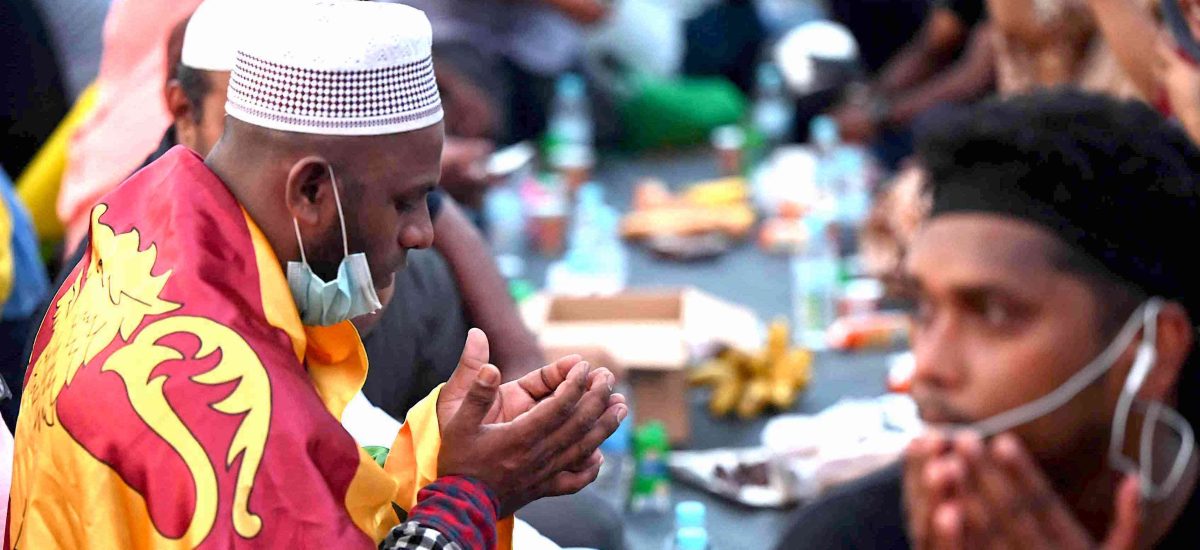
Mutual recognition of religious festivals: the state officially acknowledges all major festivals – Vesak, Diwali, Eid and Christmas – encouraging voluntary open house initiatives where communities invite neighbors from other faiths during celebrations. Participation remains voluntary, ensuring goodwill through genuine invitation. Psychosocial outcome: fosters mutual curiosity and respect; diversity experienced as enrichment.
Theological dialogue circles: theologians from all traditions meet quarterly to explore common themes such as compassion, justice, forgiveness and stewardship, issuing joint declarations. Psychosocial outcome: differences become sources of mutual enrichment; joint declarations provide moral guidance.
Economic interdependence – the colonial plantation economy created ethnic specialization and competition. Economic interdependence rebuilds shared destiny.
Ethnic joint venture mandate: government contracts above a threshold must be joint ventures between Sinhalese, Tamil and Muslim-owned firms. Psychosocial outcome: economic interdependence destroys us vs. them – your prosperity depends on my success.
Interest free microfinance hubs: Islamic benevolent loans available to all communities, administered by multi-ethnic committees. Psychosocial outcome: lifts the poor without debt traps, builds trust, demonstrates ethics serving all.
Communal entrepreneurship incubators: subsidized incubators where youth from all communities develop businesses together with cross community mentorship. Psychosocial outcome: future economic leaders share formative experiences; friendships become partnerships.
Fair trade zones: economic zones where products from all communities are promoted and exported together under a single national brand. Psychosocial outcome: national pride in collective achievement; external markets see Sri Lanka as unified.
Justice, truth and reconciliation – colonial justice systems replaced indigenous restorative practices with punitive models. Reconciliation requires hybrid approaches.
Domestically-led truth, justice and reconciliation mechanism: incorporating Sri Lankan judicial expertise, eminent legal scholars and religious elders. Mandate: truth-telling, reparations and restorative justice through community service and public acknowledgment. International best practices as advisory benchmarks, ensuring sovereignty. Psychosocial outcome:acknowledges suffering without perpetuating vengeance; prevents future violence.
Land restitution and shared custody: disputed lands jointly owned and managed by affected groups with religious sites protected. Psychosocial outcome: removes material grievance; creates shared stewardship.
Community policing with religious mediators: police stations include panels of religious mediators; minor crimes referred to mediation, not courts. Psychosocial outcome: reduces overcrowding; restores harmony; builds trust in state institutions.
Environmental stewardship – indigenous traditions revered nature; colonial plantation economy commodified it. Restoration is both ecological and spiritual.
Sacred groves and water protection: every village designates a forest and water body as sacred to all faiths, with joint protection duties. Psychosocial outcome: environmental action becomes spiritual unifier.
Interfaith eco-teams: youth from all religions compete in friendly restoration projects. Psychosocial outcome: channels competitive energy into constructive, unifying action.
Climate resilience as national duty: adaptation projects planned and executed by multi-ethnic, multi-religious teams. Psychosocial outcome: shared vulnerability reinforces brotherhood.
Education as the great integrator – colonial education fragmented society; new education must integrate it.
Mandatory trilingual education: every child learns Sinhala, Tamil and English fluently by Grade 10. Psychosocial outcome:removes linguistic barriers; ensures cross cultural communication.
Shared religious literacy: study of core tenets of all four religions, taught by joint clergy teams. Psychosocial outcome: destroys ignorance; enables seeing the divine in the other.
Dual narrative history: events taught from both majority and minority perspectives; students debate and reconcile accounts. Psychosocial outcome: prevents one-sided narratives; builds critical, empathetic citizens.
Brotherhood week: annually dedicated to interfaith and inter-ethnic friendship activities – exchange visits, joint projects and shared meals. Psychosocial outcome: institutionalized friendship; positive experiences outweigh stereotypes.
Excluding power politics and geopolitics – colonial and post-colonial geopolitics have exploited Sri Lanka’s divisions for strategic advantage. Neutrality is essential.
Constitutional ban on ethnic-based political parties: parties must have multi-ethnic leadership; no party claiming only one community. Psychosocial outcome: removes electoral incentive for polarization.
Foreign funding transparency and caps: NGOs, religious organizations and media must publish donors; geopolitical funding rejected. Psychosocial outcome: prevents foreign manipulation.
National unity oath for public officials: personal oath to protect all communities equally. Psychosocial outcome: personal accountability.
Independent geopolitical neutrality commission: vets agreements for divisiveness; any treaty dividing communities or compromising sovereignty is rejected. Psychosocial outcome: keeps nation out of rivalries.
Civic education on geopolitical manipulation: citizens learn how powers exploit ethnic divisions. Psychosocial outcome: citizens resistant to manipulation.
Asymmetrical synergy: strength from difference
A foundational principle of this framework is that no community possesses all strengths and no community is without indispensable gifts. Sustainability requires recognizing that the whole is greater than the sum of its parts and that each part’s unique contribution enhances the whole.
| Community | Asymmetrical strength | Contribution to national sustainability |
| Sinhala Buddhist | Compassion; non-attachment; mindfulness; historical stewardship | Psychological resilience, non-violence, cultural continuity |
| Tamil Hindu | Philosophical depth; artistic excellence; strong community networks | Cultural enrichment, spiritual depth, communal solidarity |
| Muslim | Ethical commerce; interest free finance; strong family cohesion | Economic ethics, demographic sustainability, bridge building |
| Christian | Educational and medical expertise; heritage of service | Professional excellence, humanitarian infrastructure, global goodwill |
The synergistic outcome: the Buddhist gift of mindfulness, the Hindu gift of artistic expression, the Muslim gift of ethical finance and the Christian gift of institutional service combine to create a civilization richer than any one tradition. No community is complete alone; each needs the other. This interdependence, disrupted by colonization, is the foundation of holistic sustainability.
When each community contributes its strengths and receives the strengths of others, the nation develops holistic sustainability that no single community could achieve alone. The result is not assimilation but integration where distinct traditions enrich rather than threaten the whole.
A model of brotherhood in diversity
Sri Lanka possesses unique advantages: indigenous diversity, high literacy, strong religious institutions and collective memory of civil war horrors, all of which survived despite colonial efforts to dismantle them. The nation has demonstrated remarkable resilience, surviving economic collapse without descending into civil conflict. This resilience must be channeled into deliberate nation building.
The framework presented here argues that sustainable pluralism does not require anyone to dilute identity. It strengthens families, mandates inter-communal cooperation, spiritualizes diversity, removes geopolitical exploitation, enforces integrity through anti-corruption and elevates loyalty and brotherhood to sacred duties. Each of these dimensions addresses a specific wound inflicted by colonization: family fragmentation, moral vacuum, extraction economy, divided loyalties and manipulated divisions.
The core innovation is the recognition of asymmetrical synergy: each community’s unique strengths are indispensable to the whole. This synergy was damaged by colonization; it must be deliberately rebuilt. The Buddhist gift of mindfulness complements the Muslim gift of ethical commerce. The Hindu gift of artistic expression complements the Christian gift of institutional service. No community is complete alone; each needs the other. This interdependence is not a threat but the foundation of holistic sustainability.
The result is not a melting pot but a mosaic where each piece retains its distinct color while contributing to a coherent whole. Brotherhood is not uniformity; it is unity in diversity, respect across difference and shared destiny despite distinct origins. This vision moves beyond tolerance, which can be cold and distant, to active fraternity where the success of the other is experienced as one’s own success.
The colonial experiment sought to divide, extract and rule. The post-colonial project must heal, integrate and liberate. In an era of rising ethno-nationalism, great power competition and global corruption, Sri Lanka can demonstrate that indigenous diversity, properly nurtured, is not weakness but the foundation of civilizational sustainability. The nation’s ancient wisdom, combined with the best insights from Islamic, Asian and Western traditions, offers a path forward not only for Sri Lanka but for fractured societies everywhere.
The world watches. The time to act is now. The framework is clear; the principles are universal; the moment is urgent. Sri Lanka’s future, and perhaps the future of pluralistic societies everywhere, depends on the courage to embrace asymmetrical synergy and build a nation where every community thrives because all communities thrive.