- A victor’s peace can be a legitimate peace. It cannot be treated as if it were a negotiated pact.
- That is not a South African model. It is two solutions for one war.
- A movement that can no longer field a conventional unit can still field a memory.
- Victory without vision is only an interval.

Sri Lanka ended its armed conflict in 2009, but the struggle over memory, accountability and reconciliation never truly ended. Retired Senior Superintendent of Police Mahil Dole argues that the country has been forced to live with two competing standards: rehabilitation for former combatants at home and continuing scrutiny of those who served the State abroad. He asks whether lasting peace is possible while those two tracks remain permanently apart today.
Every few years Sri Lanka is invited to copy a celebrated foreign remedy for a divided society. The South African Truth and Reconciliation Commission is the model most often named. The invitation sounds generous. It is also, in our circumstances, incomplete.
South Africa did not end a war by military victory and then ask only one side to confess. It negotiated a transfer of power, placed both the outgoing order and the incoming movement inside one bargain, and exchanged a measure of amnesty for a measure of disclosure. That was a single settlement for a single conflict. Sri Lanka has been living with two.
At home, the State chose rehabilitation and reintegration for the great mass of surrendered cadres. Abroad, a second process grew up: narrative warfare, diplomatic pressure and administrative penalties directed mainly at those who served the State. One conflict; two moral languages; two theories of justice that do not speak to each other.
That split, more than the absence of a commission with a fine name, is why resilience has been so hard to build.
What the literature actually says
Edward Azar called conflicts of this kind protracted social conflicts: identity conflicts in which communities come to believe that security, recognition and political access are permanently withheld. Johan Galtung drew the distinction that still matters most for us: negative peace is the silencing of guns; positive peace is the construction of a political order in which the next generation has less reason to pick them up. Sri Lanka achieved the first in May 2009. It has been arguing about the second ever since.
John Paul Lederach argued that a settlement must reach top leaders, mid-level institutions and the communities that bury the dead. It must change the relationship, not merely the text. I. William Zartman added that a conflict becomes “ripe” for negotiated settlement when both sides feel a mutually hurting stalemate.
South Africa reached that point. The National Party could no longer govern as before; the African National Congress could not seize the State by force. Sri Lanka never did. The war ended because one side’s military instrument was destroyed. A victor’s peace can be a legitimate peace. It cannot be treated as if it were a negotiated pact and then scolded for failing to produce the psychology of a negotiated pact.
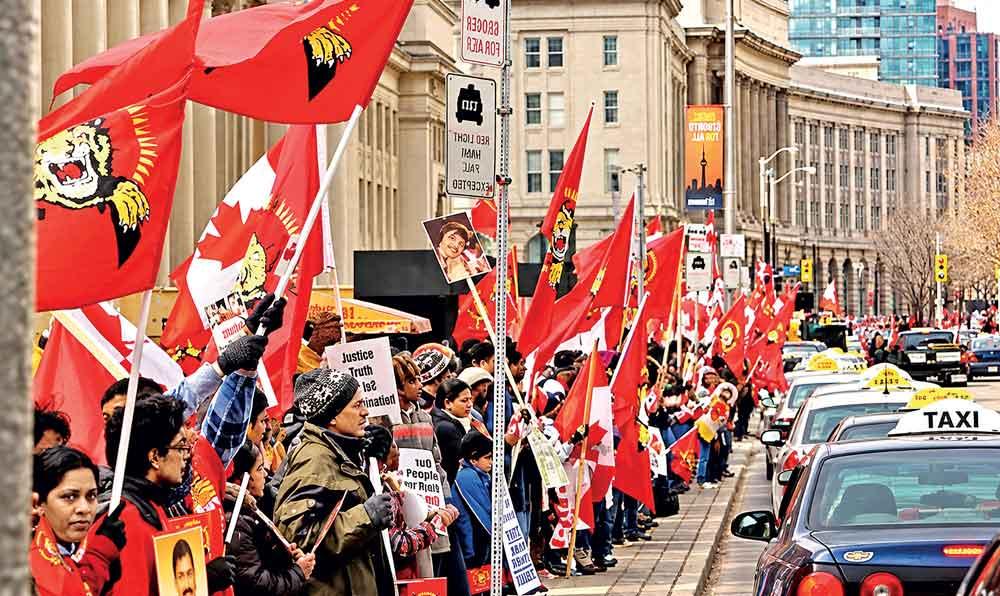
Stephen Stedman’s work on spoilers is equally relevant. Spoilers are actors who believe a settlement threatens their power, narrative or resources and therefore work to keep conflict alive in another form. After 2009 the armed organisation inside the island was broken. The political organisation outside it was not. The war shifted overseas into lobbying, lawfare and memory politics.
Why the South African template does not travel intact
The South African settlement had features we do not have. Amnesty was not a gift to one side and a hunt against the other; it was conditional on disclosure and ran in both directions, however imperfectly. The international environment also favoured a deal.
Sri Lanka is asked to perform the ritual of South African reconciliation without the structure that made the ritual possible. There was no mutually hurting stalemate. There was no joint surrender of exclusive narratives. And, most damaging of all, the remedies applied to the two sides of the same war have not been the same.
Rehabilitation and reintegration were offered to thousands of former combatants as a path back into civilian life. Administrative penalties, travel restrictions and an open-ended indictment in the court of international opinion were reserved, in the main, for those who had fought in uniform under the authority of the State.
Presumption of innocence is supposed to be the ground of any civilised process. A country cannot preach reconciliation at home while an external process treats half the conflict as crime and the other half as victimhood. That is not a South African model. It is two solutions for one war.
Colombia offers a useful contrast. Its 2016 peace agreement built a Special Jurisdiction for Peace designed to reach FARC commanders, paramilitaries and State forces under one roof. Amnesty was barred for the gravest international crimes; reduced sentences were offered in exchange for full disclosure. Colombians have fought bitterly over whether the bargain was too lenient. At least it is an argument about one system.
Sri Lanka was offered the worse of both worlds: a domestic rehabilitation track that did not test ideology hard enough, and an external indictment track that does not have to prove a case in a court that can hear the defence. That combination does not produce reconciliation. It produces two memories, two constituencies and a conflict that changes costume.
Did rehabilitation actually work?
More than twelve thousand former combatants passed through the Bureau of the Commissioner General of Rehabilitation. Vocational training, education, spiritual programmes and a later loan scheme were part of a deliberate attempt to close the armed chapter without a general slaughter of the defeated. Recorded criminal recidivism among that cohort has been low.
Those facts deserve to be stated. They do not answer the harder question: whether a twenty-five-year ideology can be traded in for a national one.
I still remember a conversation around the period of the victory events in Jaffna. I spoke for some two hours with a very senior former cadre who gave his name as Daya. He was by then attached to a State-sponsored media forum and was presented as a product of rehabilitation.
I asked him directly whether the programme had changed him. His answer has stayed with me.
“Sir, you mean to say I can be rehabilitated? I was in the organisation for over twenty-five years. I pretended to be, Sir. I follow Sun Tzu. When we are with the enemy, be like the enemy — to live another day, to fight another day.”
If even one man of that seniority could say that, then rehabilitation had changed the costume more reliably than the mind.
He then set out three resources on which a defeated organisation could still draw. I have thought of them since as the three Ms.
Motivation. Cemeteries, monuments, photographs and “martyr” sites can keep the emotional temperature of a cause high. So long as they function as political fuel rather than places of private mourning, the story of unfinished sacrifice is retold to the young.
Men. Human resources did not disappear with the last fighting formation. Universities and student bodies can become civilian theatres in which commemorations keep a generation emotionally enlisted. A movement that can no longer field a conventional unit can still field a memory.
Money. The diaspora and the businesses woven through it remained a treasury. Money that once bought weapons could buy lawyers, campaigns, academic programmes and political access.
These were not academic points. They were a warning that the organisation had already relocated the war. What followed would not look like the old war. It would look like advocacy, asylum narratives, commemorative politics and the patient capture of international language.
The cost of sleeping on a victory
The government of that time slept on the laurels of the war. It treated the absence of gunfire as the presence of a settlement. It invested too little in the unglamorous work that conflict-resolution theory actually recommends: aftercare for the rehabilitated, a civic story that could compete with martyrdom, an external strategy equal to the external campaign, and a political offer that made a young Tamil, Muslim or Sinhala life in this island more attractive than a borrowed identity from abroad.
Victory without vision is only an interval.
Wrongdoers, on every side, should be dealt with according to law and proper procedure, not through a permanent diplomatic weather system that rises and falls with the needs of other capitals. Collective punishment of a profession is not accountability. Pretended rehabilitation is not reconciliation.
What would actually serve Sri Lanka
The useful inheritance from South Africa is not the brand name of a commission. It is the idea of one process, binding on both sides of a conflict, aimed at a single political community.
Our effort now has to be geopolitical as much as domestic. We need friends who will support a resilient climate inside the island rather than an eternal inquiry about it. We need a records practice that distinguishes a live allegation from a disproved or untested one. We need rehabilitation that does not end at the camp gate, but offers work, standing and a reason not to rejoin a story that still pays.
Religious houses must be partners in civic peace, not rival headquarters. Universities must be places where the young inherit a country, not a calendar of martyrdom. Media must carry the correction with the same energy they carried the charge.
And we need a public language where the first word is Sri Lankan. Not Buddhist, Hindu, Muslim or Catholic first. Not Sinhala or Tamil first. Those attachments will not vanish, and they need not vanish. A nation is not built by erasing faith or language. It is built by refusing to let faith or language become the only passport that counts.
So long as we apply two settlements to one conflict, we will keep producing two peoples. The work of the next decade is to make that luxury too expensive — for spoilers overseas, for opportunists at home, and for a State that once mistook the end of a war for the end of a problem.
(This analysis is offered in the interest of national security, institutional reform and public safety.)
The writer is a retired Senior Superintendent of Police who served in intelligence and counter-terrorism. He is the author of Security Beyond Enforcement: Practical Approaches for a Safer Nation.