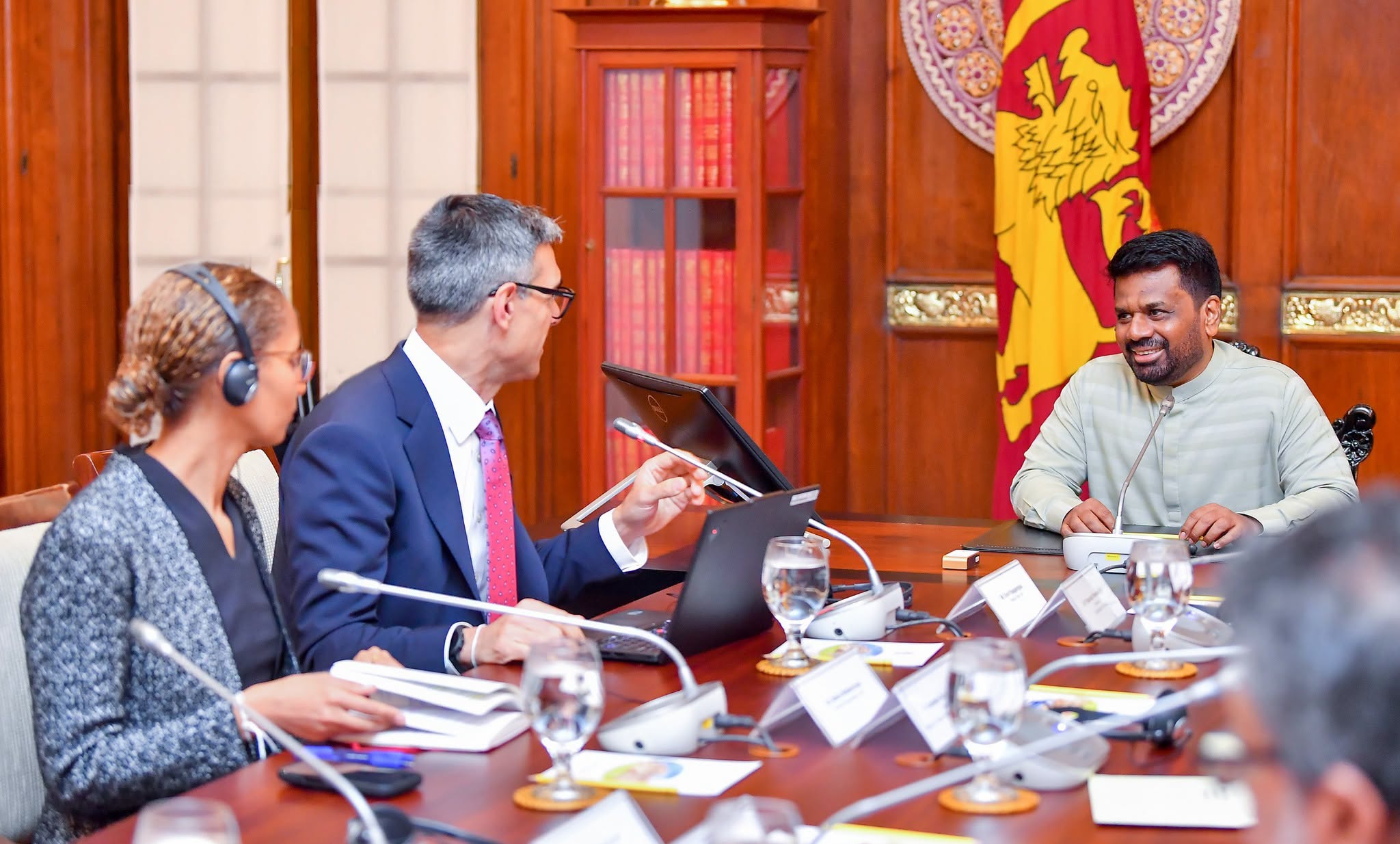
The International Monetary Fund (IMF) has urged Sri Lanka to allow domestic fuel prices to adjust in line with international market prices and maintain cost-recovery energy pricing, as the country faces renewed economic risks from the prolonged conflict in the Middle East, global trade uncertainty and the potential impact of El Niño.
The recommendation came after the IMF and Sri Lankan authorities reached a staff-level agreement on the seventh review of Sri Lanka’s four-year Extended Fund Facility (EFF) programme. The agreement remains subject to approval by the IMF Executive Board.
IMF Mission Chief for Sri Lanka Evan Papageorgiou said the government should allow domestic fuel prices to respond to international price movements while maintaining cost-recovery energy pricing and protecting vulnerable groups.
The IMF warned that Sri Lanka’s economic recovery remains resilient but could come under pressure from external shocks, particularly through higher inflation, increased fiscal pressures and reduced foreign exchange reserves.
The Fund advised the government to avoid broad or open-ended measures to shield consumers from rising energy prices if the Middle East conflict drives global fuel prices higher.
Instead, any assistance should be targeted, temporary, properly costed and kept within the government’s budgetary limits. The IMF recommended poverty-targeted cash transfers to support households most affected by higher energy costs.
The Fund noted that while measures to contain fuel prices could provide immediate relief to consumers, prolonged price controls or subsidies could weaken public finances and undermine Sri Lanka’s fiscal and debt sustainability.
The IMF also cautioned that a prolonged conflict in the Middle East could create additional inflationary pressures. If inflation expectations move significantly away from the Central Bank’s target, monetary policy may need to be tightened, it said.
Sri Lanka also remains exposed to risks arising from global trade policies and possible El Niño-related effects.
Despite these challenges, the IMF said recent economic indicators remained positive. Sri Lanka’s economy grew by 4.2% year-on-year in the second quarter of 2026, marking the 11th consecutive quarter of economic growth. Headline inflation stood at 8% in September, while gross official reserves reached US$6.9 billion at the end of August.
The IMF said the country’s banking sector remained well-capitalized and profitable, while fiscal performance during the first half of 2026 was strong. Debt restructuring has also been largely completed.
The Fund stressed that sustaining these gains would require Sri Lanka to remain committed to its broader reform programme.
It called for a medium-term revenue strategy to strengthen government revenue while making the tax system more efficient and equitable. The IMF also urged continued improvements in public investment management, including efforts to accelerate recovery and reconstruction following Cyclone Ditwah.
The Fund further emphasized the importance of greater exchange-rate flexibility to help Sri Lanka absorb external shocks and build foreign exchange reserves.
It also called for continued implementation of the country’s anti-corruption framework and structural reforms aimed at supporting long-term economic growth. These include trade liberalization, modernization of business and labour regulations, improved access to finance, expansion of digital public infrastructure and addressing infrastructure gaps.
If approved by the IMF Executive Board, the latest agreement would provide Sri Lanka with SDR 254 million, equivalent to around US$345 million. This would bring total IMF disbursements under the current programme to approximately SDR 2.032 billion, or US$2.7 billion.
Board approval will be subject to Sri Lanka’s Finance Minister presenting the 2027 Budget to Parliament in line with IMF programme requirements, as well as completion of a financing assurances review covering multilateral financing contributions and progress on debt restructuring.
The IMF mission visited Sri Lanka from September 10 to 23, before continuing virtual discussions with senior Sri Lankan officials to finalize the staff-level agreement.