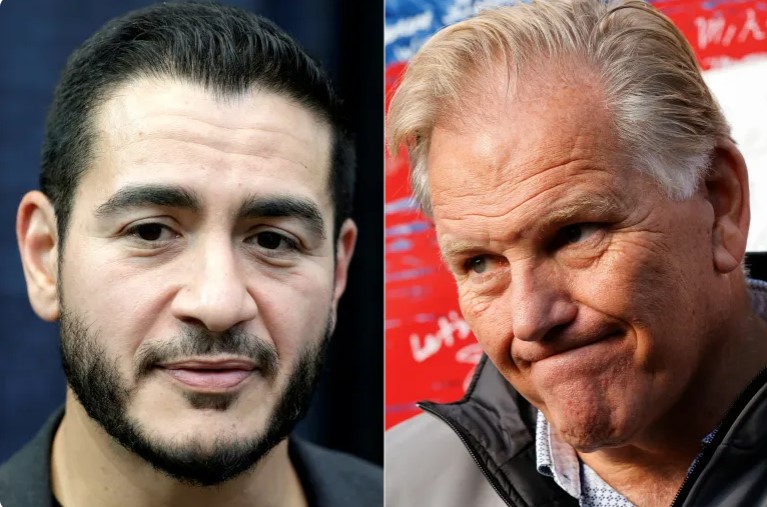
The US Senate race in Michigan between Democratic candidate Abdul El-Sayed and his Republican rival Mike Rogers has attracted significant national and international attention, with the outcome potentially influencing the balance of power in Congress and the future direction of American politics.
The contest has also become a major political issue for Arab and Muslim communities, as well as a test of support for progressive policies and candidates critical of Israel.
Chadi Abdulrazek, an Arab American political activist volunteering for El-Sayed’s campaign, told Al Jazeera that journalists from several European countries had contacted him about the election.
He said the vote represents an opportunity for communities to make their voices heard and demonstrate their role in American politics.
Who are the candidates?
Abdul El-Sayed, 42, is a public health advocate who previously headed the health department in Detroit and Wayne County, Michigan.
The Democrat, who is of Egyptian descent, could become the first Muslim elected to the US Senate if he wins.
El-Sayed previously contested the 2018 Michigan gubernatorial election but lost the Democratic primary to Gretchen Whitmer.
His campaign has focused on progressive policies, particularly Medicare for All, which proposes expanding government-funded healthcare coverage to all Americans.
His Republican opponent, Mike Rogers, 63, is a former member of the US Congress and a former state legislator.
Rogers contested the 2024 Senate election but narrowly lost to Democratic Senator Elissa Slotkin.
A close ally of President Donald Trump, Rogers has nevertheless attempted to distance his campaign from the president on certain issues.
He has supported Trump’s decision to join Israel in the war against Iran while also calling for an end to the conflict.
His campaign priorities include tax cuts, increased domestic energy production and deregulation.
Why is the Michigan Senate race important?
The Michigan Senate seat is currently held by retiring Democratic Senator Gary Peters.
A victory for Rogers would give Republicans control of the seat for at least six years, making it more difficult for Democrats to secure a majority in the Senate.
Beyond the political balance in Congress, the election is also being viewed as a test of the electoral appeal of progressive policies in a politically competitive state.
El-Sayed’s positions, including his criticism of Israel’s military operations in Gaza, have become major issues in the campaign.
A victory for the Democratic candidate could also influence the strategies adopted by progressive politicians and potential Democratic presidential candidates ahead of the 2028 presidential election.
Why is Haley Stevens back in the spotlight?
Former Democratic primary rival Haley Stevens has become another major figure in the campaign after publicly endorsing Rogers.
Stevens, a Democratic member of the US House of Representatives, had previously criticised El-Sayed’s positions on Israel while maintaining that she would vote for him.
However, her fiancé’s endorsement of Rogers, reportedly citing El-Sayed’s criticism of Israel’s military campaign in Gaza, brought renewed attention to the issue.
On Sunday, Stevens appeared alongside Rogers at a press conference and formally endorsed the Republican candidate.
“I’m choosing country over hate,” she said, insisting that her decision was not anti-Muslim.
Her endorsement drew strong criticism from Democratic leaders. Senate Minority Leader Chuck Schumer described her actions as a “dispicable betrayal”.
El-Sayed also responded to the controversy, saying he did not think about Stevens.
Why has Israel become a major election issue?
Israel’s military operations in Gaza and US support for Israel have emerged as central issues in the Michigan Senate campaign.
El-Sayed has accused Israel of committing genocide in Gaza, a position that has drawn support from some human rights advocates and criticism from pro-Israel groups.
He has also argued that American taxpayer money should be prioritised for domestic needs, including healthcare and infrastructure, rather than military assistance overseas.
The American Israel Public Affairs Committee (AIPAC) has played a significant role in the campaign through its political spending.
The organisation reportedly spent more than $30 million supporting Stevens during the Democratic primary in an effort to defeat El-Sayed.
Despite the financial support for his primary opponent, El-Sayed secured the Democratic nomination.
Rogers, who has pledged strong support for Israel, has since used El-Sayed’s positions on Palestine as a campaign issue, accusing him of prioritising Palestinian interests over Michigan.
Meanwhile, AIPAC’s political arm, the United Democracy Project, has returned to the race, spending hundreds of thousands of dollars on campaign mailers opposing El-Sayed.
According to The New York Times, the organisation has also channelled $9 million to a Republican group supporting Rogers.
What are voters saying?
Supporters of both candidates have described the election as particularly important for the future of Michigan and the United States.
Former Democratic state legislator Cynthia Johnson expressed concern about negative campaigning targeting El-Sayed’s religion and ethnic background.
She said the political atmosphere surrounding the election could have serious consequences for communities and future generations.
Meanwhile, Rogers supporter Rob Cortis, speaking outside a Trump rally on Sunday, said the election was crucial for the country’s future, border security and the next generation of Americans.
The competing messages reflect the wider political divisions surrounding the Michigan Senate race, which has become a significant contest over domestic policy, foreign relations, immigration and the role of minority communities in American politics.