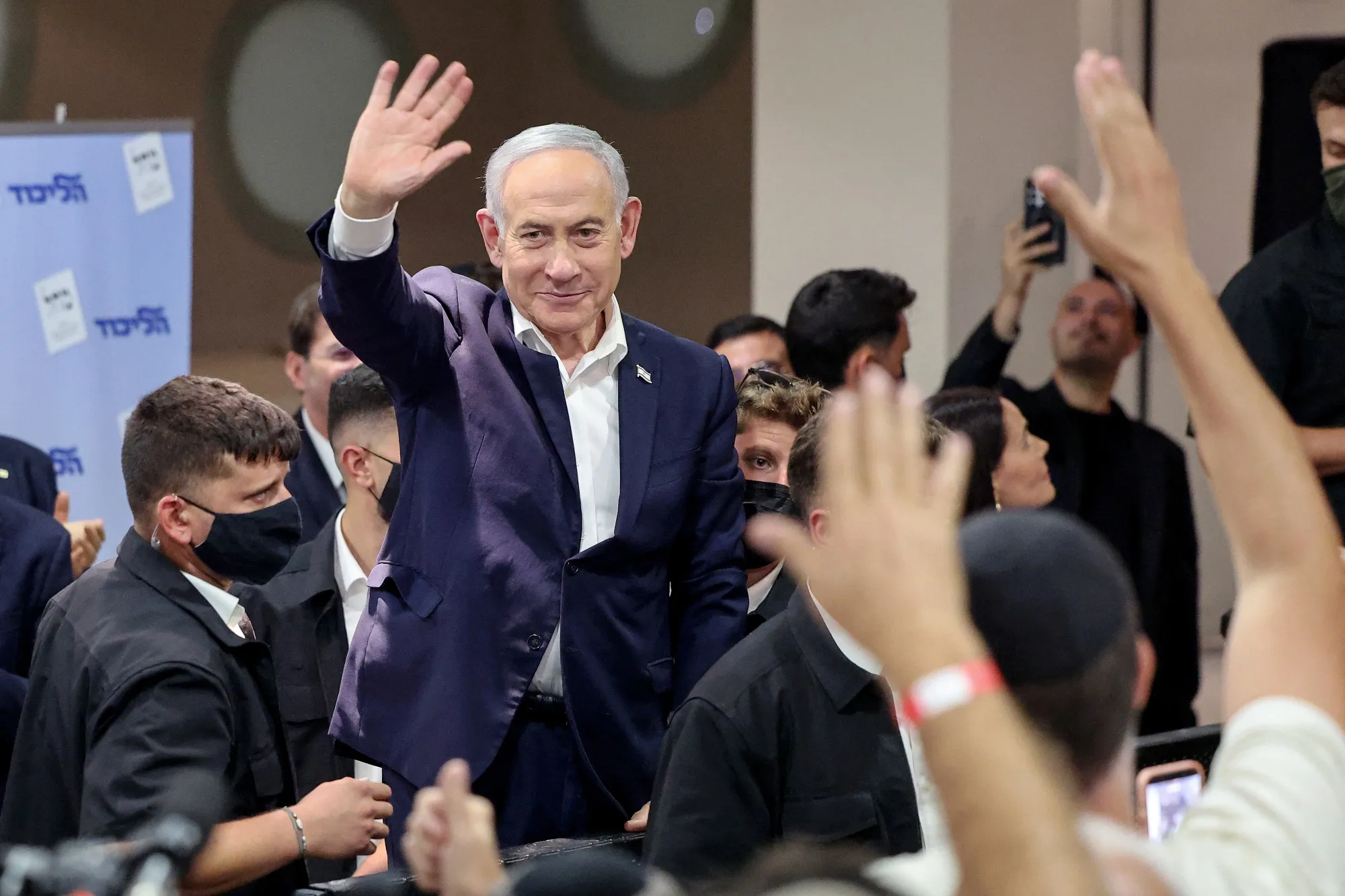
Prime Minister Benjamin Netanyahu’s political bloc has emerged as the largest grouping in Israel’s general election but failed to secure a parliamentary majority, according to final results released on Friday (October 30).
Netanyahu’s coalition of right-wing and far-right parties won 53 seats in the 120-member Knesset, with his Likud party securing 27 seats to remain the largest single faction.
Meanwhile, the opposition bloc, led by centrist politician Gadi Eisenkot, secured 48 seats.
The results also highlighted the growing influence of Arab political parties, with Raam and the Joint List winning a combined 19 seats, potentially placing them in a decisive position during negotiations to form the next government.
Neither bloc secured the 61 seats required for a parliamentary majority, raising the prospect of lengthy coalition negotiations and potentially another election if efforts to form a government fail.
Allegations of Foreign Funding Spark Controversy
The election results followed a day of political controversy after Netanyahu’s allies raised allegations that Arab-Israeli political groups had received foreign funding to influence the vote.
The allegations, which have not been supported by publicly presented evidence, were rejected by both Arab-majority political groupings and Qatar.
Israel’s domestic security agency, Shin Bet, confirmed that it was investigating suspected irregularities but stressed that the inquiry was not intended to cast blame on an entire community that had participated lawfully in the democratic process.
The Central Elections Committee also dismissed suggestions of widespread electoral irregularities as entirely groundless.
Arab Parties Emerge as Potential Kingmakers
The controversy centred on allegations that Raam had received financial support from Qatar to fund vote-buying operations.
Likud described the allegations as a major political scandal, claiming that the election results had been compromised.
However, Raam leader Mansour Abbas denied any wrongdoing and welcomed an investigation. The Joint List, meanwhile, accused Netanyahu and his allies of conducting a campaign of incitement against Arab voters.
Opposition figures accused Netanyahu of attempting to undermine public confidence in the election results after failing to secure a governing majority.
Gadi Eisenkot also alleged that Likud and Netanyahu had launched a coordinated campaign to delegitimise the election outcome.
Qatar Rejects Allegations
Qatar has strongly rejected the allegations, describing them as ridiculous and dangerous.
Netanyahu has previously faced controversy over alleged financial links between his aides and Qatar. Two of his aides were arrested last year over allegations that they had received payments from the Gulf state.
Netanyahu, Israel’s longest-serving prime minister, has also faced criticism over his government’s past policy of allowing Qatari funding to flow into Gaza in an effort to maintain stability, an approach that came under renewed scrutiny following the October 7, 2023, Hamas-led attacks on Israel.